In the world of precision manufacturing, understanding "what is the role of programming in CNC machines" is crucial. CNC machines operate through intricate programming that controls every aspect of their function. According to Dr. Alice Thompson, a leading expert in CNC technology, "Programming is the heart that drives the precision of CNC machining." Her insight underscores the essential role programming plays in achieving accurate production.
Programming defines how a CNC machine interprets and executes design specifications. Without well-crafted code, even the most advanced hardware would struggle to produce expected results. Errors in programming can lead to significant setbacks, underscoring the need for meticulous attention to detail. Each line of code tells the machine what to do, making it essential for engineers and operators to fully grasp these instructions.
However, there are challenges. The learning curve for mastering CNC programming can be steep. Continuous updates in software and technology require ongoing education. This evolution can sometimes feel overwhelming. As the industry adapts, it remains vital for professionals to reflect on their programming practices. Embracing both the technical and creative aspects of CNC programming is necessary for success.
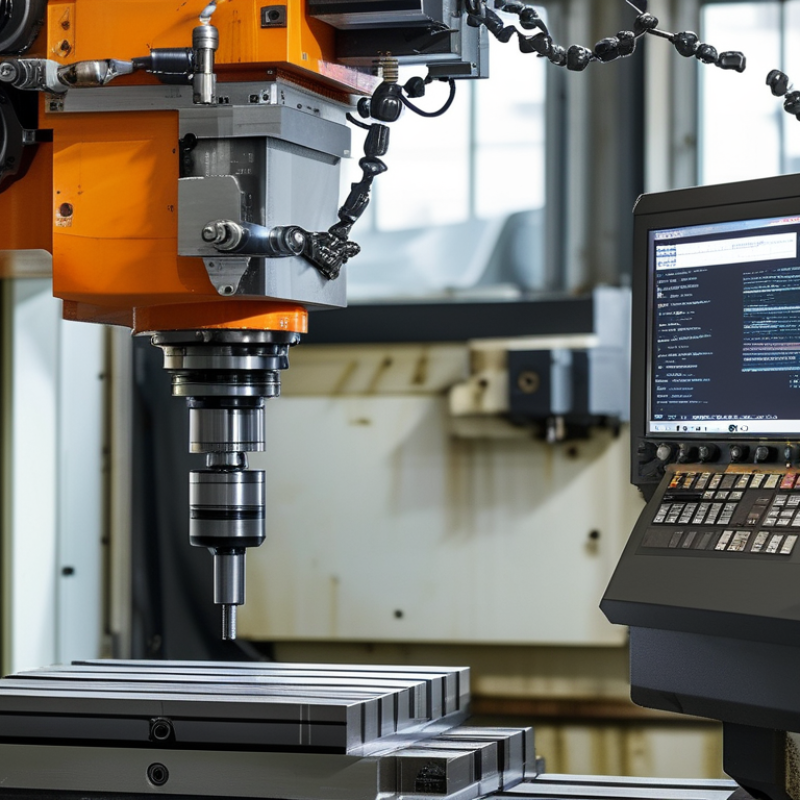
Overview of CNC Machines and Their Functions
CNC machines, or Computer Numerical Control machines, play a vital role in modern manufacturing. They automate the control of tools and machinery via a computer, enhancing precision and efficiency. According to a report by MarketsandMarkets, the global CNC machine market is expected to reach nearly $100 billion by 2026. This growth reflects the increasing reliance on automation in various industries.
These machines perform a range of functions, such as milling, turning, and drilling. Each function is crucial for producing parts with high accuracy. For instance, a CNC milling machine can create complex shapes with tolerances of ±0.005 inches. However, achieving such precision depends heavily on the programming in the CNC system. Programming errors can lead to defects or waste, affecting production efficiency and costs.
The flexibility of CNC systems allows customization for different applications. Yet, this adaptability can also introduce challenges. With varying materials and components, the programming must be meticulously executed. A report from McKinsey emphasizes that companies adopting advanced manufacturing technologies must invest in training personnel to effectively program CNC machines. This becomes essential for maintaining competitive advantages in the market. The dynamic nature of programming in CNC operations demands continuous learning and adaptation.
Fundamentals of Programming in CNC Systems
Understanding the fundamentals of programming in CNC systems is vital for professionals in the manufacturing industry. CNC, or Computer Numerical Control, relies heavily on programming to automate machinery and ensure precision. According to a report by Statista, nearly 70% of manufacturers report increased efficiency due to CNC technology. The programming language, typically G-code, tells CNC machines how to move. Each command corresponds to a specific movement or action.
Effective CNC programming also requires a keen understanding of the machine's capabilities. Knowing the limitations of your equipment can prevent costly errors. It’s crucial to test complex programs in a safe environment before full-scale production. Also, consider integrating simulation software to visualize processes and catch potential issues early.
Tips: Always document your programming changes. This practice aids in troubleshooting and helps new team members learn quickly. Regularly updating your skills through workshops is beneficial as CNC technology continues to evolve rapidly. Recognizing areas for improvement in your programming process is key to long-term success.
Key Programming Languages Used in CNC Operations
Programming plays a crucial role in the operation of CNC machines, enabling precise and automated manufacturing processes. Key programming languages facilitate this function. G-code, for instance, is the most widely used language, directing machines on movement and operations. According to industry reports, over 70% of CNC machines utilize G-code. This standardization helps in training operators and synchronizing various machines.
Another important language is M-code, which complements G-code by controlling auxiliary functions like coolant activation and tool changes. M-code allows for intricate operations, providing a richer functionality set. For complex tasks, some programmers turn to high-level languages like Python or C++. These languages can enhance CNC programming with custom scripts, improving efficiency. Reports indicate that businesses that adopt such approaches see productivity increases of up to 20%.
However, mastering these languages can be challenging. Operators often face obstacles, such as steep learning curves and complex syntax. While G-code offers flexibility, its extensive commands can confuse new users. Many companies recognize the need for training programs to address these gaps. Understanding programming languages is essential for effective CNC operations, ensuring that machines perform with accuracy and reliability.
How to Understand the Role of Programming in CNC Machines? - Key Programming Languages Used in CNC Operations
| Programming Language |
Description |
Common Applications |
Pros |
Cons |
| G-code |
The primary programming language for CNC machines, describing specific actions and movements. |
Milling, turning, plasma cutting |
Widely accepted and industry standard, robust for automation. |
Can be complex for beginners, manual editing required for program changes. |
| M-code |
Used for machine control commands like starting/stopping coolant and spindle functions. |
Tool changes, coolant control |
Simple commands, enhances G-code instructions. |
Limited to machine functions; may vary by manufacturer. |
| CAM Software |
Computer-Aided Manufacturing software that generates G-code from models. |
3D printing, CNC milling and turning |
User-friendly, visual programming, saves time in code generation. |
Costly software, may require training. |
| BASIC |
Beginner's All-purpose Symbolic Instruction Code, used in some CNC programming. |
Simple machine setups, educational purposes |
Easy to learn, suitable for simple tasks. |
Limited capabilities for complex operations. |
| Python |
General-purpose programming language, used for advanced CNC applications and automation. |
Automation scripting, data analysis |
Highly versatile, extensive libraries for data handling. |
Not specific to CNC, requires additional integration. |
Understanding G-code and M-code in CNC Programming
Understanding G-code and M-code is crucial for anyone involved in CNC programming.
G-code, often considered the language of CNC machines, communicates precise movements and operations.
It instructs the machine on where to move, how fast to go, and which paths to follow.
Each command represents a specific action, from linear moves to circular interpolations.
For example, the command G01 tells the machine to move in a straight line.
Each number corresponds to a precise function, making it fundamental for accurate machining.
M-code, on the other hand, handles auxiliary functions.
It controls tasks like spindle rotation and coolant application.
For instance, the command M03 turns the spindle on in a clockwise direction,
while M08 activates the coolant. Understanding these commands is essential.
Misusing them may lead to machine errors or even part damage.
The interplay between G-code and M-code creates a harmonious workflow, but it requires careful attention to detail.
While learning these codes, common mistakes include misinterpreting commands or overlooking crucial parameters.
CNC programming demands precision and attention. A single incorrect code can disrupt production.
Continuous practice helps programmers gain proficiency.
Seeking feedback on code structure is beneficial.
The learning process involves reflecting on errors to improve programming skills and achieve better outcomes.
The Impact of Programming on CNC Machine Performance and Accuracy
Programming plays a crucial role in the performance and accuracy of CNC machines. It defines the instructions that guide the machine's movements, ensuring precise cuts and engravings. Accurate programming can dramatically reduce errors in production, leading to high-quality outputs. However, even the best machines rely on clean, error-free code. One mistake in the program can lead to defective products or costly downtime.
The complexity of programming can present challenges. Operators may struggle with coding languages and commands. A slight miscalculation can cause significant issues in machining. Understanding the nuances of programming is essential. Training in programming skills is vital for enhancing machine performance. Not all operators have the same level of proficiency, which can affect output consistency. Continuous learning and practice are necessary for improvement.
In addition, the evolving technology in CNC programming introduces new features and methods. Keeping up with advancements can be daunting. Yet, embracing these updates can yield better results and performance. A balance must be struck between traditional techniques and modern innovations. This ongoing learning process is crucial for maximizing machine potential and achieving desired quality.
Impact of Programming on CNC Machine Performance and Accuracy
FAQS
: CNC machines automate tool and machinery control using a computer. They enhance precision in manufacturing.
CNC machines can mill, turn, and drill. Each function produces parts with high accuracy.
A CNC milling machine can achieve tolerances of ±0.005 inches. This requires careful programming.
Programming errors can cause defects and waste. This negatively impacts production efficiency and costs.
Proper training is necessary for programming CNC machines effectively. It helps maintain competitive advantages in the market.
G-code is the most common programming language for CNC machines. It directs machine movements and operations.
M-code complements G-code, controlling auxiliary functions like coolant changes. It allows for more complex operations.
High-level languages like Python can enhance CNC programming. They help improve efficiency with custom scripts.
Operators often struggle with steep learning curves. The complexity of the syntax can be overwhelming.
Implementing training programs can close knowledge gaps. This support is vital for effective CNC operations.
Conclusion
The article "How to Understand the Role of Programming in CNC Machines?" explores the essential functions of CNC machines and the pivotal role that programming plays in their operation. It begins with an overview of CNC machines, highlighting their significance in precision manufacturing. Fundamental programming concepts are then discussed, leading to an examination of the key programming languages used in CNC operations, notably G-code and M-code.
Understanding G-code and M-code is crucial, as these languages provide the instructions that drive CNC machinery to achieve desired outcomes. The article emphasizes that programming is not merely a preliminary step but is fundamental to enhancing the performance and accuracy of CNC machines. In conclusion, it answers the critical question: what is the role of programming in CNC machines? It underscores that effective programming directly influences the efficiency, precision, and capabilities of CNC operations, establishing it as a cornerstone of modern manufacturing processes.

 MecMill Precision