How to Understand the Difference Between CNC Turning and Milling?

Time:2026-07-17 Author:Henry
0%

When exploring the world of manufacturing, understanding the nuances between processes is crucial. Many often ask, "what is the difference between CNC turning and milling?" Both techniques are vital in shaping materials, yet they serve distinct purposes. CNC turning involves rotating the workpiece against a stationary cutting tool, ideal for cylindrical shapes. In contrast, milling uses a rotating tool to cut into a fixed workpiece, offering versatility in shapes and designs.

This distinction is not merely academic. It impacts production efficiency, accuracy, and even the choice of materials. An engineer working on a project may favor one process over the other based on specific requirements. For example, turning excels in creating symmetrical parts, while milling is exceptional for producing complex, detailed features. The choice between these methods can determine the success of a project.

Despite these advantages, each method has limitations. CNC turning may struggle with intricate designs, while milling may require more time for execution. Understanding these differences is essential for making informed decisions in manufacturing, ensuring that the right technique is applied for the desired outcome.
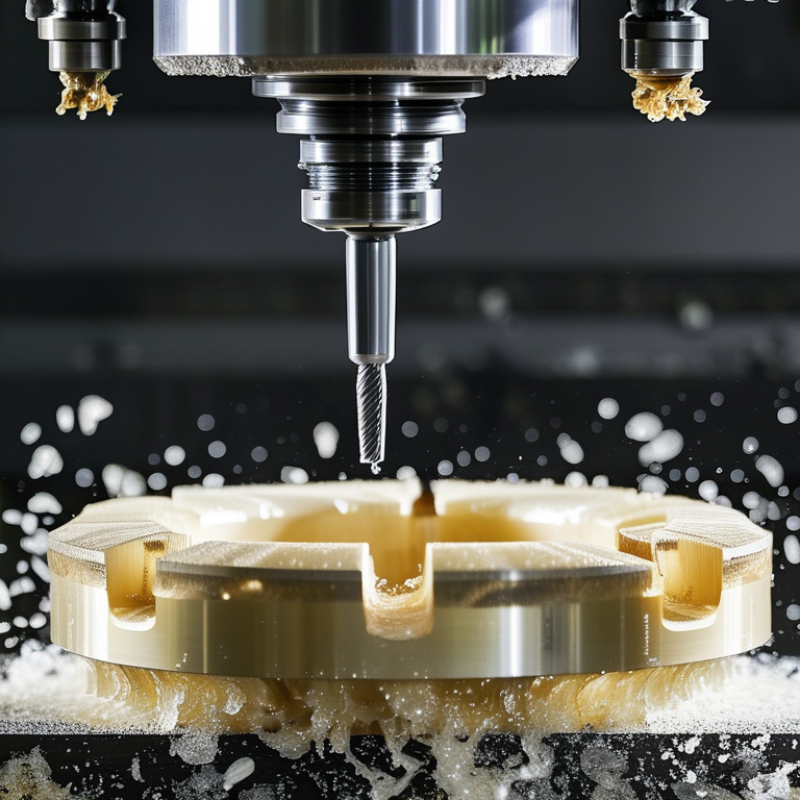
How to Understand the Difference Between CNC Turning and Milling?

Overview of CNC Machining Processes

CNC machining encompasses various processes, with turning and milling being two of the most popular. According to a market report by MarketsandMarkets, CNC machining is projected to grow from $70 billion in 2021 to over $100 billion by 2026. This growth highlights the increasing reliance on precision machining across industries.

CNC turning involves rotating the workpiece against a stationary tool to create cylindrical parts. It excels in producing parts with constant diameters. In contrast, milling uses a rotating cutter to remove material from a stationary workpiece. This process is adept at creating complex shapes and features. Each method has its own strengths and limitations. Turning is often faster for symmetrical parts, while milling can achieve detailed geometries.

However, the choice between the two processes is not always straightforward. Factors like part complexity, tolerance requirements, and production volume come into play. Some manufacturers find that a combination of both processes yields the best results. As the industry evolves, understanding these differences remains crucial for optimizing machine shop operations.

How to Understand the Difference Between CNC Turning and Milling? - Overview of CNC Machining Processes

Process Description Applications Material Compatibility Advantages
CNC Turning A machining process that rotates a workpiece against a cutting tool to remove material. Manufacturing cylindrical parts, shafts, and rods. Metals, plastics, and composites. High precision, efficient for volume production, suitable for symmetry.
CNC Milling A machining process that uses rotary cutters to remove material from a stationary workpiece. Production of flat surfaces, complex shapes, and custom parts. Metals, plastics, and wood. Versatile, capable of producing intricate designs, and higher flexibility in shape.

Definition and Principles of CNC Turning

CNC turning is a precise manufacturing process widely used to create cylindrical parts. It involves rotating a workpiece while a cutting tool removes material from the surface. This process produces a high level of accuracy and smooth finishes, making it ideal for components like shafts, bushings, and bolts. Many manufacturers appreciate the efficiency of CNC turning, especially for large production runs.


The principles behind CNC turning rely on computer numerical control technology. Operators input specific coordinates and parameters into the CNC machine. This automation ensures consistency and reliability. However, users must understand the machine's limits. Tool wear and machine calibration can affect outcomes. Regular maintenance and monitoring are crucial for optimal performance.


Understanding CNC turning allows engineers to choose the right process for their needs. It’s essential to balance speed and precision. Not every project requires the same approach. Sometimes, traditional machining might offer more flexibility. Each project presents unique challenges, prompting reflection on the best methods to achieve desired results.

Definition and Principles of CNC Milling

CNC milling is a cutting process that employs a rotating tool to remove material from a workpiece. This method uses a variety of tool shapes, allowing for complex designs. The workpiece is secured in place, while the milling machine moves the tool across it. Precision is key here. This technique is essential for producing intricate parts used in aerospace, automotive, and medical industries.

Tips for CNC milling include understanding your materials. Different materials react differently to milling. Knowing how to set the right speed and feed is crucial. Test your settings with scrap material before moving to your final project. This can save time and resources.

It's also important to analyze tool wear regularly. A worn tool can lead to inaccurate dimensions and poor surface finishes. Don’t hesitate to replace tools that are showing signs of wear. Regular checks ensure consistent quality in your finished products.

Key Differences Between CNC Turning and Milling

CNC turning and milling are two fundamental machining processes in manufacturing. While they both shape materials, their methods and applications differ significantly. CNC turning is primarily used for circular parts. A rotating workpiece is cut by a stationary tool, resulting in cylindrical shapes. This method excels in creating items like shafts and tubes.

On the other hand, milling involves a stationary workpiece. A rotating tool moves across the surface, removing material to create complex shapes. This technique is ideal for making intricate components, such as gears and brackets.

While both processes require precision, their setups differ. Turning tools remain fixed while the part spins, whereas milling tools can navigate in multiple directions.

Understanding these differences helps in choosing the right machining technique for your project. However, it's vital to recognize that not all projects fit neatly into one category. The choice can depend on the desired finish, precision, and part complexity.

Designers must contemplate these factors carefully to avoid expensive mistakes. Balancing efficiency with the right technology is crucial for successful machining outcomes.

Applications and Industries for CNC Turning and Milling

CNC turning and milling are essential for various industries. Each method serves unique applications, making them invaluable. CNC turning is often used for creating cylindrical parts. Industries like automotive and aerospace rely on this precision method for components such as shafts and hubs. The ability to produce complex shapes fast is a huge advantage in these sectors.

Milling, on the other hand, is versatile for flat, complex shapes. Manufacturing industries utilize this technique for creating gears, brackets, and plates. The flexibility in design makes milling crucial in prototyping. Combining both methods can yield superior results for intricate projects.

Tips: Always assess the specific requirements of your project. Understanding material specifications is vital. Not all materials are suitable for turning or milling. Test your designs to ensure accuracy before full production. Collaborating with experienced engineers enhances the final outcome. Their insights can lead to improved efficiency and reduced waste, making your project more sustainable. Reflect on past projects to learn from mistakes; this is a key part of growth.

FAQS

: What is CNC milling?

: CNC milling is a process that uses a rotating tool to remove material from a workpiece. It allows for complex designs.

Why is precision important in CNC milling?

Precision ensures that parts meet specific dimensions and quality standards. Inaccuracies can lead to product failure.

How can I choose the right speed for my milling project?

Understand your materials' properties. Experiment with scrap material before finalizing settings. This reduces waste and improves efficiency.

What should I do if my milling tool shows signs of wear?

Regularly check tool condition. If it's worn, replace it to maintain accurate dimensions and quality in your products.

What are the main differences between CNC turning and milling?

CNC turning uses a rotating workpiece and stationary tool, ideal for cylindrical shapes. Milling uses a stationary workpiece and rotating tool for complex shapes.

How can I ensure the quality of my final product?

Assess project requirements carefully. Collaborate with experienced engineers and reflect on past mistakes for better outcomes.

What kind of projects are suitable for CNC turning?

CNC turning is ideal for creating cylindrical parts, such as shafts and tubes, used in various industries.

Can both CNC turning and milling be used in the same project?

Yes, combining both methods can enhance design capabilities and improve the final product's quality.

What is the significance of testing designs before production?

Testing helps confirm accuracy and suitability of materials, preventing costly errors during full production runs.

Conclusion

CNC machining encompasses various processes, with CNC turning and milling being two of the most prominent. CNC turning primarily involves rotating the workpiece against a stationary cutting tool, allowing for the creation of cylindrical shapes. In contrast, CNC milling operates by moving a cutting tool across a fixed workpiece, enabling the production of complex geometric designs and flat surfaces.

So, what is the difference between CNC turning and milling? The key distinctions lie in the movement of the workpiece and tool; turning focuses on rotation, while milling centers on linear motion. These processes are utilized across numerous industries, including aerospace, automotive, and manufacturing, each benefiting from their unique capabilities to produce precise and intricate parts tailored to specific applications.

Henry

Henry

Henry is a dedicated marketing professional with a profound expertise in the company's offerings. With years of experience in the industry, he possesses an impressive understanding of the market dynamics and consumer behaviors that drive success. Henry is committed to sharing his insights through......