What Industries Utilize CNC Machining Services?

Time:2026-05-22 Author:Mason
0%

CNC machining services play a crucial role across various industries. From aerospace to healthcare, these services drive precision manufacturing. According to a report by MarketsandMarkets, the global CNC machining market is projected to reach $100 billion by 2025, reflecting an annual growth rate of over 7%. This growth highlights the significance of understanding what industries use CNC machining services.

Experts emphasize that CNC machining is vital in high-demand sectors. John Smith, a leading analyst in manufacturing technologies, states, "CNC machining enables industries to meet exacting standards efficiently." The automotive sector accounts for a significant portion, where complex parts require high precision. This need extends to the medical field, where customized equipment is essential for patient care.

The versatility of CNC machining is evident in sectors such as electronics and defense. Yet, challenges remain. Many companies struggle to keep up with technological advancements. Therefore, staying informed about industry trends is crucial. Understanding what industries use CNC machining services can lead to better decision-making and innovation.
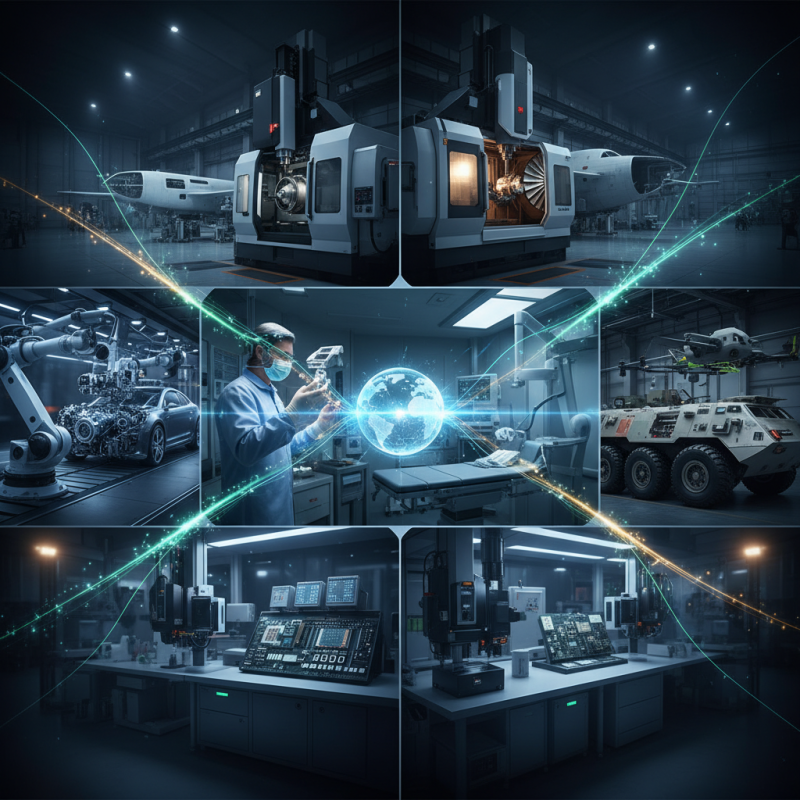
What Industries Utilize CNC Machining Services?

Industries Leveraging CNC Machining for Precision Manufacturing

CNC machining services are vital across various industries. Aerospace, for example, relies heavily on precision manufacturing. Components like turbine blades and structural elements require exact specifications. A tiny error can lead to massive consequences. Hence, aerospace companies prioritize CNC machining for quality assurance.

The automotive sector also benefits from CNC technology. Manufacturers produce intricate parts such as gear systems and engine components using CNC machines. These processes enhance efficiency and reduce production time. However, achieving perfect precision remains a challenge. Even with advanced machinery, slight deviations may occur.

Medical device production is another area where CNC machining shines. Surgical instruments necessitate meticulous detail. Each tool must meet stringent regulatory standards. Yet, variations can happen during the manufacturing process. Companies must continuously evaluate their methods to ensure compliance and performance. This ongoing refinement is essential for patient safety and satisfaction.

Key Applications of CNC Machining in the Aerospace Sector

CNC machining is pivotal in the aerospace sector. It ensures precision and quality in manufacturing critical components. According to a report by Statista, CNC machining contributes to a market size of over $100 billion within aerospace manufacturing. This highlights its prominence in producing lightweight yet robust parts.

Components like turbine blades and landing gear are often made using CNC machining. These parts must withstand extreme conditions. The accuracy of CNC machines allows manufacturers to achieve tight tolerances essential for safety. For instance, a deviation of just 0.002 inches can lead to catastrophic failures in flight.

Another interesting aspect is the ongoing push for sustainability. The aerospace industry aims to reduce waste during production. CNC machining, with its subtractive nature, helps minimize excess material. Yet, the reliance on machines raises questions about job displacement. Balancing automation with skilled labor will be critical for the future of the industry.

CNC Machining in the Automotive Industry: Enhancing Efficiency and Quality

The automotive industry has embraced CNC machining to boost efficiency and enhance quality. This manufacturing process allows for precise shaping of complex parts. Industries rely on it for prototypes and mass production. CNC machining improves production timelines, yet it can lead to some challenges.

One challenge is the high initial setup costs. Companies must invest in advanced machinery and skilled labor. These costs can be a barrier for smaller manufacturers. Moreover, component design needs to be meticulously planned. Even small design flaws can lead to production delays. This requires constant communication between design teams and machinists.

Despite these hurdles, the benefits often outweigh the drawbacks. CNC machining reduces human error and ensures uniformity in parts. This is crucial for safety in automotive assemblies. As the industry evolves, manufacturers must adapt to new technologies. Continuous training for staff is essential. Embracing these changes will help maintain competitiveness in a demanding market.

Role of CNC Machining in Medical Device Manufacturing

CNC machining plays a significant role in the medical device manufacturing industry. The precision of CNC machines helps create intricate parts essential for various medical applications. From surgical instruments to implantable devices, these components require tight tolerances and complex geometries. Each piece must meet strict regulatory standards, ensuring safety and functionality.

In the medical field, time is critical. Engineers and manufacturers utilize CNC machining to optimize production efficiency. Rapid prototyping is possible, allowing for quick adjustments before mass production. However, the reliance on technology can also introduce challenges. There might be limitations in certain materials or difficulties in achieving specific designs. Continuous improvement and innovation are vital to address these shortcomings.

Quality control is essential in this sector. Each part undergoes rigorous testing to confirm its integrity. Despite advanced CNC capabilities, human oversight remains crucial. Mistakes in programming or setup can lead to defects. It's a delicate balance between automation and human expertise. Ongoing training is needed for operators to stay updated with evolving technologies. The future of CNC machining in medical device manufacturing lies in addressing these challenges while ensuring high-quality standards.

Utilization of CNC Machining Services in the Electronics Industry

CNC machining has become vital in the electronics industry. Precision and accuracy are essential in creating components like circuit boards and connectors. Manufacturers rely on CNC machining to produce intricate parts that must fit perfectly within devices. This technology enhances the efficiency of production lines.

In electronics, CNC machines can create complex shapes and designs. These machines can work with various materials, including metals and plastics. The ability to customize components according to specific requirements makes CNC machining a valuable asset. Despite its advantages, there can be challenges. Issues like machining errors can arise if programming is not precise. Quality control is crucial to catch such problems early.

Collaboration between engineers and CNC operators is key. Their combined expertise ensures high-quality outputs. Nonetheless, constant learning is necessary. As technology evolves, staying updated with new techniques enhances reliability. In this fast-paced industry, adaptability is essential for sustained success.

FAQS

: What industries use CNC machining?

: Many industries rely on CNC machining, including aerospace, automotive, and medical device manufacturing.

Why is precision important in aerospace machining?

Precision ensures safety; even minor errors can lead to catastrophic failures in flight operations.

How does CNC machining benefit the automotive sector?

It enhances efficiency by allowing intricate parts to be produced quickly, but achieving perfect precision is challenging.

What role does CNC machining play in medical devices?

CNC machining creates intricate parts that meet strict regulatory standards, ensuring safety in medical applications.

What challenges does CNC machining face in medical manufacturing?

Challenges include material limitations and design complexities, highlighting the need for continuous improvement.

How do companies ensure quality in CNC machining?

Companies conduct rigorous testing and maintain human oversight to prevent programming or setup errors.

How does sustainability relate to CNC machining in aerospace?

CNC machining minimizes waste during production, contributing to the aerospace industry's sustainability goals.

What is rapid prototyping in CNC machining?

It allows for quick adjustments to designs before mass production, aiding in efficiency and effectiveness.

Why is human oversight still necessary in CNC machining?

Despite automation, human expertise is crucial for quality control and to catch potential defects during production.

How can industries improve CNC machining processes?

Continuous innovation and operator training can help address limitations and enhance overall quality.

Conclusion

CNC machining services are essential across various industries that require precision manufacturing. Primarily, sectors such as aerospace and automotive leverage CNC machining to enhance efficiency, ensure quality, and meet the high standards of their production processes. In aerospace, CNC machining is crucial for crafting intricate components that demand exact specifications, while in the automotive industry, it plays a vital role in producing parts that enhance vehicle performance and safety.

Additionally, CNC machining is instrumental in the medical device manufacturing sector, where precision and reliability are paramount. In the electronics industry, it supports the production of complex and compact components that drive innovation. Overall, understanding what industries use CNC machining services reveals its critical contribution to modern manufacturing across these diverse fields.

Mason

Mason

Mason is a seasoned marketing professional with a deep expertise in the company's offerings and a passion for driving brand awareness. With a strong background in digital marketing strategies, he has an innate ability to connect with diverse audiences and effectively communicate product benefits.......