Improving CNC production efficiency is essential for manufacturers aiming for growth. Many struggle with balancing speed and quality. The key question stands: how to speed up CNC production without losing quality?
Technological advancements offer innovative solutions. Automated systems and optimized workflows can enhance productivity. Yet, many operators overlook machine maintenance and tool selection. These factors play a crucial role in maintaining precision. Ignoring them can lead to longer downtimes and diminished output.
Quality assurance processes are vital. Implementing regular inspections can prevent flaws. It demands time and investment, but the payoff is significant. Continuous training for operators further strengthens the process. Even small adjustments can have substantial impacts. Remember, the path to efficiency requires ongoing reflection and adaptation. Each step toward better practices counts.
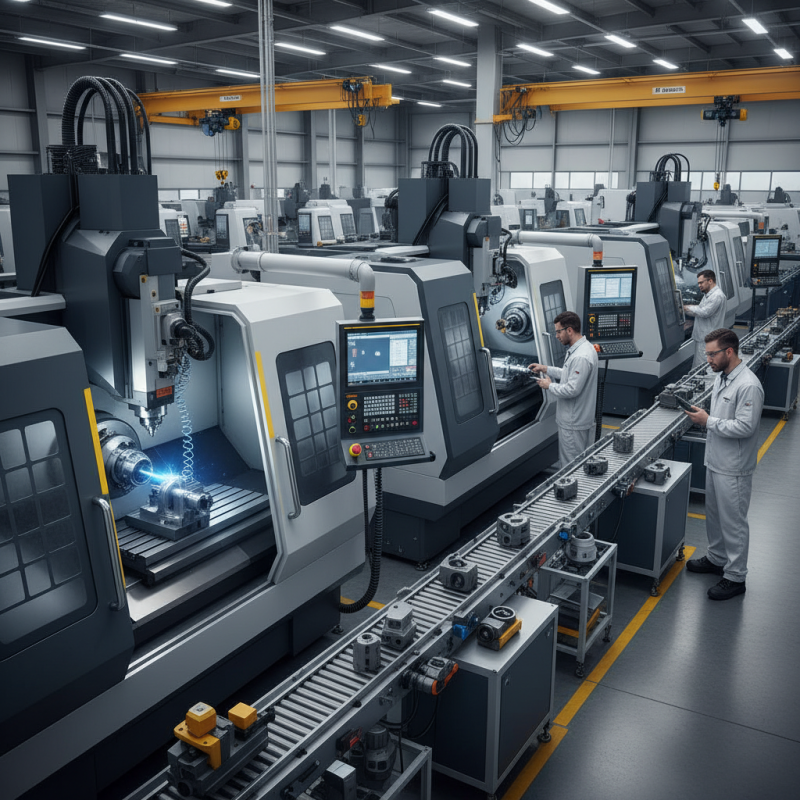
Identifying key process bottlenecks is crucial in CNC manufacturing. A study indicates that nearly 30% of production delays stem from inefficient processes. When a machine or operation slows down, the entire workflow suffers. Regular assessment of each stage in the production line can reveal these slow points.
For instance, a common bottleneck occurs during tool changes. If a machine takes too long for adjustments, it eats into valuable production time. According to industry benchmarks, optimal tool change times should be under 10 minutes. Any longer can signal a need for a review. Another area often overlooked is programming. Effective programming can significantly reduce cycle times, but poor coding can extend production unnecessarily.
Data from recent industry surveys shows that 70% of manufacturers underestimate the impact of tooling and setup on production efficiency. Addressing these overlooked areas can yield significant gains. Focusing on these bottlenecks is essential for not just speeding up production, but also ensuring that quality remains uncompromised during the process. Regular maintenance checks and staff training are vital steps as well. They contribute to keeping machines running optimally and training staff on best practices.
Optimizing tooling and fixture design is critical for enhancing CNC production efficiency. According to industry data, poorly designed fixtures can lead to a 20% increase in production time. This not only affects output but also inflates costs. A well-designed fixture holds workpieces securely, allowing for faster machining cycles. By using modular designs, manufacturers can easily adapt to different projects, reducing setup times significantly.
Tooling is another area that warrants attention. The selection of the right cutting tools impacts both productivity and quality. For instance, tools with advanced coatings can extend tool life by up to 30%, while high-speed machining practices can decrease cycle times by roughly 25%. However, it shouldn’t be overlooked that the initial costs of specialized tooling can be high. Manufacturers must weigh these costs against the potential for improved efficiency.
There is also the risk of over-engineering fixtures, which can complicate designs unnecessarily. Simplicity can often lead to greater reliability. Engaging with engineers during the design phase can help pinpoint which features truly enhance performance and which may just add complexity. The balancing act between efficiency and quality is delicate but essential. By refining tooling and fixture designs, manufacturers can drive productivity without compromising the integrity of their output.
Implementing advanced CNC programming techniques can significantly enhance production efficiency without compromising quality. By adopting strategies like adaptive programming, operators can adjust tool paths in real-time, optimizing the machining process as conditions change. This flexibility allows for better material utilization and reduced cycle times.
Additionally, using simulation software can help detect potential errors before production begins, minimizing costly mistakes.
Another effective approach involves utilizing multi-axis machining. This technique allows for complex geometries to be created in fewer setups, decreasing lead times. However, mastering this requires a deep understanding of tool movements and part designs. Training operators to leverage these advanced techniques ensures they can execute intricate tasks successfully while maintaining high-quality standards.
While many CNC machinists have mastered traditional programming, they might struggle with implementing advanced methods. Continuous learning and adaptation are crucial in this evolving field. Regularly revisiting established practices can reveal opportunities for growth. It's essential to create an environment that encourages experimentation and critical thinking among operators. Balancing speed and quality often necessitates trial and error, making reflection on each job vital for ongoing improvement.
Regular machine maintenance is crucial for CNC production efficiency. Studies show that effective maintenance can reduce downtime by up to 30%. This reduction leads to smoother operation and enhanced productivity. One key practice is daily inspections. Checking tools and components can prevent small issues from escalating. A simple routine can save significant time.
Adhering to a structured maintenance schedule is another effective approach. Reports indicate that machines trained with regular care have a lifespan increase by 20%. Operators often overlook this. They focus solely on production targets. However, neglecting maintenance can result in critical failures. The risk of costly repairs rises when machines are under-maintained.
Incorporating predictive maintenance techniques can yield impressive results. Utilizing sensors and software can identify potential problems early. This method enhances equipment reliability and decreases unexpected breakdowns. Despite these advantages, many businesses still ignore predictive measures. They might see it as an unnecessary expense. A shift in mindset is needed to embrace long-term benefits and reduce future losses.
Training operators is crucial for enhancing skills in CNC production. Skilled operators can significantly improve productivity without sacrificing quality. According to a recent report from the National Institute of Standards and Technology, a well-trained operator can increase production efficiency by up to 30%. This emphasizes the need for ongoing education and development in manufacturing environments.
Investing time in operator training pays off. Precise training programs can hone specific skills, such as machine setup and maintenance. These competencies lead to fewer errors and downtime, allowing for quicker turnaround times. Companies that prioritize training often report lower defect rates. In fact, businesses that focus on skills training experience a 24% decrease in production errors.
Here are some tips for effective operator training:
This proactive approach fosters a culture of continuous improvement. However, it is essential to recognize that training alone may not solve all problems. Operators must continually adapt to new technologies and methods in the CNC landscape.
: It helps to uncover inefficiencies that cause production delays, affecting overall workflow.
Tool changes often create delays if they exceed optimal times of under 10 minutes.
Effective programming can reduce cycle times, while poor coding can extend production unnecessarily.
It can reduce downtime by up to 30%, leading to smoother operations and greater productivity.
Daily inspections can catch small issues before they escalate, saving valuable production time.
Skilled operators can boost production efficiency up to 30%, reducing errors and downtime.
Hands-on learning, real-life scenarios, and measurable goals can enhance training effectiveness.
They may focus too much on production targets, neglecting essential maintenance tasks.
It identifies potential problems early, enhancing equipment reliability and reducing unexpected breakdowns.
They may view it as an unnecessary expense, ignoring its long-term benefits for production efficiency.
To understand how to speed up CNC production without losing quality, it's essential to first identify key process bottlenecks in manufacturing. Recognizing these obstacles allows for targeted improvements that can enhance overall efficiency. Additionally, optimizing tooling and fixture design plays a pivotal role in streamlining production workflows, enabling faster setups and transitions.
Moreover, implementing advanced CNC programming techniques can lead to more effective machining processes, reducing cycle times while maintaining precision. Regular machine maintenance is another critical aspect, as it helps prevent unexpected downtimes that could hinder production rates. Lastly, training operators to enhance their skills and productivity ensures that the workforce is equipped to utilize these improvements effectively, ultimately achieving the goal of speeding up CNC production while preserving high quality.

MecMill Precision