CNC production rarely slows for one dramatic reason. More often, small delays gather around the machine: a worn tool, an unclear setup sheet, a waiting operator, or a first-off part that fails inspection. One missed tolerance can stop an entire batch. The spindle may be turning, yet the factory is losing time.
Tony Schmitz, a recognized machining researcher and manufacturing educator, offers a useful principle: “Cutting faster is useful only when the process remains stable.” That idea matters when manufacturers ask how to speed up cnc production without losing quality. Higher feed rates alone cannot solve poor workholding, unstable tool engagement, or inconsistent material. Sometimes, a slower cut produces more good parts per shift. That feels counterintuitive.
A practical improvement begins with measurement. Track setup time, cutting time, tool-change frequency, inspection delays, and rejected parts. Then examine the actual workflow beside the machine. Is the operator searching for gauges? Are programs approved too late? Does coolant look cloudy after several shifts? These details reveal hidden waste.
Experienced teams usually improve one constraint at a time. They standardize proven tools, shorten setup routines, verify programs before loading, and monitor tool wear. Sensors can help, but disciplined procedures still matter. Technology is not magic.
Quality checks should move closer to production, not merely occur at the end. A small in-process measurement can prevent hours of scrap. Still, every shop has different materials, machines, and tolerance demands. There is no universal speed setting. The strongest improvements come from controlled trials, honest data, and a willingness to question familiar habits.
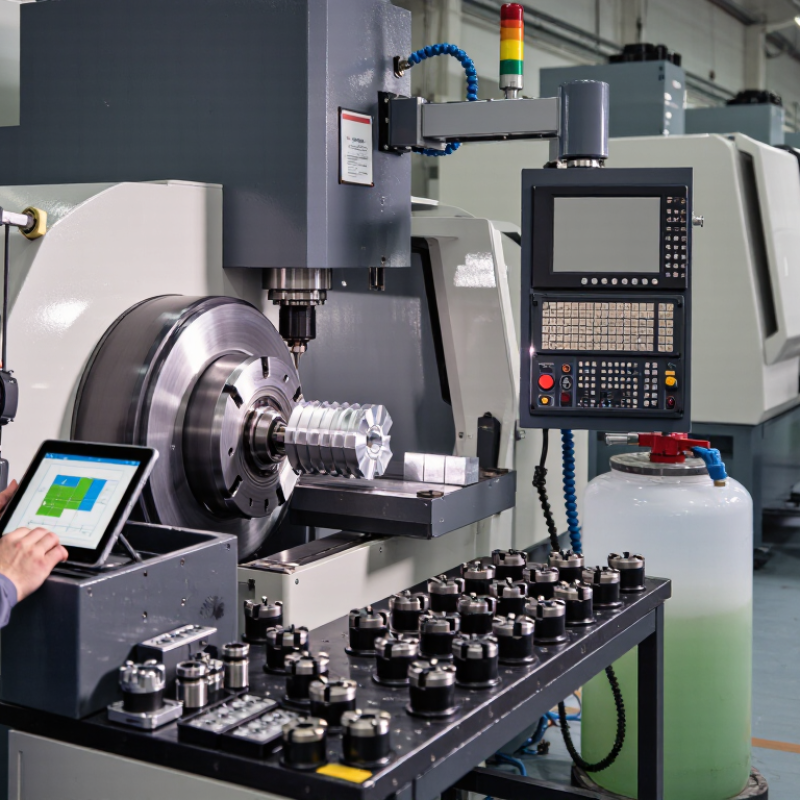
CNC production speed is more than spindle RPM or a short cycle time. It means producing acceptable parts at a stable rate, with limited waiting, rework, and downtime. A fast machine can still deliver slowly when operators search for tools, programs remain unverified, or materials arrive late. Speed is not noise. It is dependable output.
In a busy workshop, I measure cycle time from the first tool movement to the completed inspection, then compare it with the planned rate. I also track setup minutes, machine utilization, scrap, and unplanned stops. These details reveal hidden losses. A ten-second improvement may look impressive, but it means little if inspection queues add twenty minutes. That distinction matters.
Improvement usually starts with reliable data. Standardized workholding can reduce repeated alignment, while preset tools help control setup variation. Clear programs and approved cutting parameters also reduce cautious adjustments on the shop floor. However, pushing feed rates too aggressively may increase tool wear, vibration, or rejected surfaces. I have seen teams celebrate shorter cycles before noticing higher maintenance costs. The measurement was correct, but the decision was incomplete. A better target is the highest repeatable speed that protects quality, people, and equipment. It may be slower than expected. That is often the more honest number.
Small setting errors often add seconds to every part. Excessive rapid moves, slow feeds, pauses, and high retracts can quietly extend the cycle.
Check chip load, spindle load, chip shape, and surface finish together. Increasing speed without checking these signs may create heat, poor finishes, or tool damage.
Too few flutes may waste spindle capacity. Too many flutes can trap chips inside deep pockets. Shorter tools often reduce vibration.
No. A rigid tool may allow higher cutting speed, but its edge can wear early. I once saved time briefly, then lost it through tool replacement and rework.
Inspect linking paths, retract heights, acceleration, and unnecessary pauses. Long gentle movements may appear efficient in software but move slowly on the machine.
Change one setting at a time. Measure ten cycles, not one. The first result can mislead you.
Replace it before slower feeds, extra inspections, or poor finishes become routine. Replacing it too early wastes tooling, but waiting too long may create scrap.
Use verified material data, steady coolant, secure workholding, and clean chip paths. Running near maximum speed may save seconds while increasing heat, vibration, and bearing wear.
Record cycle time, scrap, alarms, tool wear, and maintenance findings. Small records often expose patterns. I still find judgment imperfect, so measured correction matters.
CNC production speed is more than reducing cycle time; it measures how efficiently a machine, operator, material, and process work together while meeting quality requirements. Slow manufacturing may result from inefficient toolpaths, unsuitable cutting parameters, excessive setup time, tool wear, poor workholding, unnecessary tool changes, or inconsistent maintenance. Machine settings and tool selection directly influence cutting performance, surface finish, accuracy, and equipment life, so faster is not always better.
To improve output, begin by measuring cycle times and identifying delays, then optimize feeds, speeds, depths of cut, toolpaths, and setup procedures through controlled testing. Use suitable tools, maintain proper cooling and chip removal, standardize proven processes, and monitor tool condition and machine performance. The key is understanding how to speed up cnc production without losing quality by balancing productivity with dimensional accuracy, surface finish, operator safety, and machine durability. Regular review and gradual improvement can create a faster, more stable, and cost-effective CNC workflow.

 MecMill Precision