In 2026, CNC machining is a practical choice for parts that need repeatable dimensions, complex features, or steady production volumes. A programmed machine can follow the same tool path across a batch, while an operator guides a manual machine through each cut. For manufacturers asking “what are the advantages of cnc machining over manual machining,” the answer often starts with consistency. A set of aluminum brackets, for example, can be produced with matching hole locations and profiles, provided the setup, tooling, and inspection are sound.
The benefits extend beyond repeatability. CNC equipment can coordinate multiple axes, machine curved surfaces, and reduce hands-on cutting time. That can make detailed parts easier to produce and help shops plan labor more predictably. The operator still matters. They select tools, secure the workpiece, check the program, and measure finished features with instruments such as calipers or micrometers. Not by magic. A poor fixture or incorrect offset can produce a whole batch of bad parts faster.
Manual machining remains useful for one-off repairs, simple cuts, and jobs where a skilled machinist can adjust directly by feel. CNC may also require programming time, setup costs, and trained staff, so it is not automatically the cheaper option. That trade-off is easy to overlook. Comparing the methods means considering part complexity, quantity, tolerances, and inspection needs—not just machine speed.
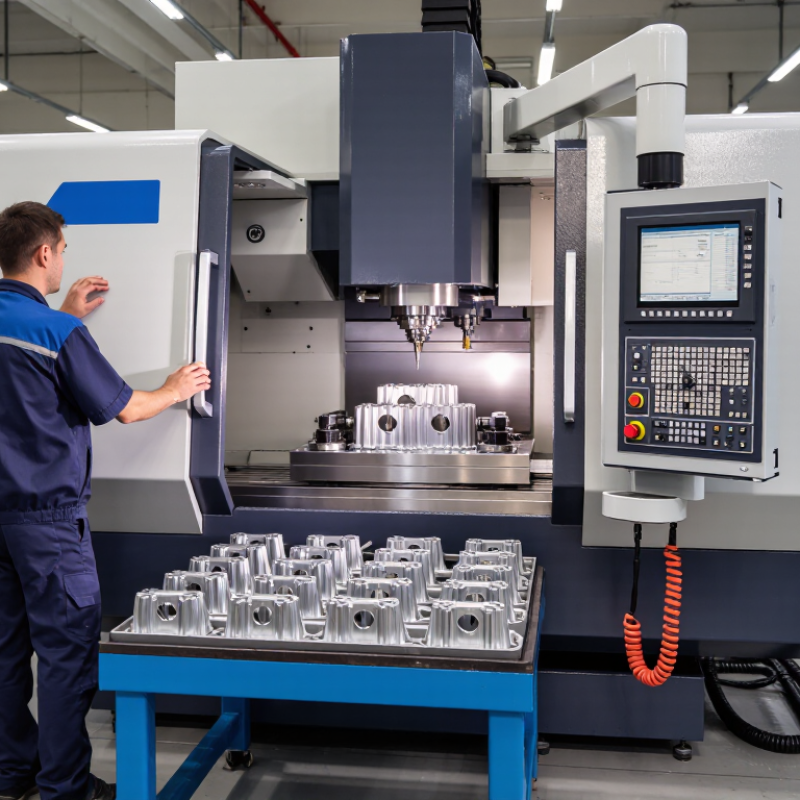
How CNC Machining Differs from Manual Machining
CNC machining differs from manual machining through control, repeatability, and workflow. Manual machining relies on an operator’s hand movements, readings, and constant adjustments. A CNC machine follows programmed coordinates, feeds, speeds, and tool changes. The distinction becomes clear on the shop floor. A 50-part order may require repeated measurements on a manual mill. CNC equipment can reproduce the same pocket with far less variation. However, setup still matters. A wrong datum can repeat an error perfectly.
The International Federation of Robotics reported 541,302 industrial robot installations worldwide in 2023. This figure does not represent CNC machines directly, but it shows the wider shift toward automated production. The U.S. Bureau of Labor Statistics projects a 2% employment decline for machinists and tool-and-die makers from 2022 to 2032. Skilled operators remain essential, especially during inspection, fixture design, and troubleshooting. Automation changes the task, not the need for judgment.
Manual machining can be faster for one-off repairs, simple parts, or urgent modifications. The operator can touch the workpiece, listen to cutting noise, and react immediately. CNC machining becomes stronger with complex geometry, repeat orders, and tight production schedules. Digital files also support easier revisions and process records. Yet CNC is not automatically better. Programming takes time, and maintenance costs can be significant. The best choice depends on quantity, tolerance, geometry, and available expertise. Sometimes, the old handwheel still wins.
How CNC Automation Improves Precision and Repeatability
2026 Top CNC Machining Advantages Over Manual Machining
CNC automation improves precision by controlling tool movement through programmed coordinates. Each cutting path follows the same digital instructions. This reduces variation between operators, shifts, and production batches. ISO 230-2 provides testing methods for positioning accuracy and repeatability in machine tools. These tests expose small errors that operators may not see beside a warm spindle.
The World Economic Forum’s Global Lighthouse Network reports that advanced factories can achieve major productivity gains through connected automation. Its case studies often show double-digit improvements in output, quality, and downtime control. CNC systems support this progress by recording offsets, feed rates, alarms, and inspection results. A 0.02 mm tool offset becomes visible data, not a guess. Still, automation is not perfect. Poor fixturing, worn tools, or incorrect code can repeat the same mistake hundreds of times.
Tips: Verify the first article with calibrated gauges. Track tool wear by cutting time and surface finish. Keep a human approval step for unusual dimensions. Small workshops may gain more from stable setup routines than expensive software. That point is easy to overlook. Metrics from the U.S. National Institute of Standards and Technology also emphasize traceable measurement for reliable manufacturing decisions. Precision begins with measurement, not the machine alone.
How CNC Machining Increases Production Speed and Consistency
CNC Machining Advantages Over Manual Machining
CNC machining increases production speed by controlling tool movement through programmed instructions. Once the setup is verified, machines can repeat the same cutting path with minimal variation. This reduces manual repositioning and shortens cycle times. In a busy workshop, that difference may save several minutes per part. Across hundreds of parts, the time savings become significant. Consistency also improves. Features remain aligned, hole locations stay stable, and surface finishes become easier to monitor. Operators can focus on inspection, tool condition, and process adjustments instead of repeating every movement by hand. This practical division of work often improves both output and reliability.
CNC is not automatically perfect. A wrong tool offset can produce a whole batch of incorrect parts. Poor fixturing can create vibration, dimensional drift, or visible marks. Experienced machinists check the first part carefully, compare measurements with the drawing, and record results. In-process inspection helps detect wear before it affects production. Manual machining still has value for quick repairs and unusual one-off work. CNC works best when programming, tooling, fixturing, and inspection support each other.
Tips: Start with a proven setup sheet. Confirm tool offsets before cutting. Use inspection intervals based on material, tolerance, and tool wear. Keep measurement records, even when production seems stable. Review failed parts honestly; a rushed setup may look efficient but create more downtime later.
2026 Top CNC Machining Advantages Over Manual Machining - How CNC Machining Increases Production Speed and Consistency
| Comparison Dimension |
CNC Machining |
Manual Machining |
Production Impact |
| Repeatability |
Runs programmed toolpaths repeatedly; results depend on machine condition, setup, tooling, material, and process control. |
Relies more heavily on the operator’s technique and ability to reproduce settings and movements. |
Programmed operations can make repeated parts more consistent when setups and cutting conditions are controlled. |
| Cycle-Time Consistency |
Automated axis movements and programmed cutting sequences help keep operation time predictable from part to part. |
Feed, positioning, and operation timing are controlled directly by the machinist and may vary between operators or runs. |
More predictable cycle times support production planning and scheduling. |
| Production Speed |
Can perform multiple programmed operations in sequence, with reduced need for continuous manual control during cutting. |
Requires hands-on control for many machining movements and adjustments. |
CNC is often advantageous for repeat production; a simple one-off part may be quicker to make manually if setup and programming would take longer. |
| Operator Involvement |
Operators typically prepare and verify the program, set up the machine, load parts, and monitor the process. Some operations can run with limited direct intervention. |
The machinist generally controls machining actions directly throughout the operation. |
Automation can reduce hands-on time per repeated part, but CNC still requires skilled setup, monitoring, and quality checks. |
| Part Complexity |
Computer-controlled axes and programmed toolpaths can produce complex contours and coordinated movements, subject to machine capability and setup. |
Complex shapes can require more operator skill, careful positioning, and additional machining steps. |
CNC can make complex geometries more practical to reproduce across a production run. |
| Changeovers and Setup |
A new part may require programming, workholding, tool selection, and setup verification; stored programs can be reused for repeat jobs. |
Setup may be straightforward for simple work, but settings and machining steps often need to be recreated for each job. |
CNC setup costs can be offset by repeat production, while manual machining may suit simple, low-quantity work. |
| Quality Control |
Programs help reproduce machining sequences, but part inspection and process checks are still necessary. |
Quality depends on operator control and inspection during and after machining. |
Consistent processes can reduce variation, but neither method guarantees a conforming part without appropriate measurement and control. |
| Best-Fit Production |
Well suited to repeated parts, complex features, and jobs where consistent programmed operations are valuable. |
Often practical for one-off parts, simple operations, repairs, and work requiring frequent hands-on adjustment. |
Choosing the method based on quantity, complexity, setup time, and tolerance needs can improve overall productivity. |
Actual cycle time, accuracy, and repeatability vary with the machine, tooling, workholding, material, program, operator, and inspection method. CNC machining does not automatically make every job faster or more accurate.
How CNC Systems Support Complex Designs and Flexible Production
CNC systems make complex designs more practical by converting digital drawings into controlled tool movements. A five-axis machine can reach angled surfaces without repeatedly repositioning the part. This may reduce setup errors on components with curved pockets, intersecting holes, or sloped edges. The operator still needs to check tool access, cutting forces, and material behavior before production begins.
Small details matter. A programmed toolpath can repeat a 0.2-millimeter feature across a batch, but only when the stock is held securely and the cutting tool remains in good condition. Sensors and in-process measurements can flag drift, while a first-article inspection confirms whether the setup matches the drawing. These checks are especially useful when a design changes late or a shop must produce several versions in small quantities. A revised program can often adjust dimensions without rebuilding every manual setup. Still, flexibility has limits: thin walls may vibrate, and intricate shapes can require slower cuts or custom fixtures. I have seen a clean digital model look straightforward, then demand more careful machining than expected. Planning helps, but it does not remove every surprise.
2026 Top CNC Machining Advantages Over Manual Machining
How CNC systems support complex designs and flexible production
CNC machining can execute programmed toolpaths, coordinate multiple axes, and repeat operations from a digital program. The 1–5 scores below are a qualitative comparison of typical process capabilities, not measured production data; results depend on the machine, tooling, material, and operator.
How CNC Machining Affects Labor, Costs, and Workplace Safety
CNC machining changes the work more than it removes the worker. On a manual mill, an operator may adjust each pass by feel and watch the cutter closely. With CNC, time shifts toward programming, setup, tool checks, and inspection. A machinist still loads stock, confirms offsets, and checks the first part with measuring tools. Shorter cycle times can free people for other tasks, but only when jobs are planned well. Setup still matters. A poorly chosen toolpath can waste hours, even on an advanced machine.
Costs depend on volume and part complexity. For repeated parts, CNC can reduce variation and limit scrap; consistent dimensions also mean fewer corrective adjustments. Yet programming, fixtures, tooling, and machine maintenance add real costs. For a one-off part, manual machining may be the sensible choice. That is not automatic.
Safety can improve when guards enclose the cutting area and workers avoid repetitive hand-feeding near moving tools. Chip conveyors may reduce manual cleanup, but hot chips and sharp edges remain hazards during maintenance and unloading. Training, lockout procedures, and clear work instructions still matter. A machine can reduce exposure, not erase it.
Conclusion
This article explains what are the advantages of cnc machining over manual machining by comparing how each method controls and produces parts. CNC machines follow programmed instructions, helping reduce variation between components and maintain precision across repeated operations. Automation can also shorten production cycles by carrying out machining steps consistently, while operators prepare materials, monitor processes, and perform quality checks.
CNC systems can handle intricate shapes and make it easier to adjust production when designs or quantities change. These capabilities support both detailed custom work and consistent larger runs. Although setup, programming, and equipment require investment, automation may reduce repetitive labor and material waste over time. CNC machining can also improve workplace safety by limiting direct interaction with cutting tools, provided that machines are operated and maintained responsibly.

 MecMill Precision