In the world of precision machining, the choice between 3-axis and 5-axis machining is crucial. “What is the difference between 3 axis and 5 axis machining?” is a common question among engineers and manufacturers. Industry expert Dr. Harold Schmidt notes, “5-axis machining offers unparalleled positioning, but it comes with complexity.” Understanding these differences can shape production capabilities and costs.
3-axis machining is simpler. It involves three movements: X, Y, and Z. This method is efficient for basic parts. However, it limits the design possibilities and part geometries. In contrast, 5-axis machining adds two additional rotational axes. This capability allows cutting tools to approach from various angles. It enables the creation of intricate shapes, reducing setups and improving accuracy.
Choosing the right machining method requires careful consideration of your project needs. While 5-axis machining provides significant advantages, the complexity and higher costs may deter some manufacturers. Reflecting on the right choice is essential for optimizing production efficiency and outcomes.
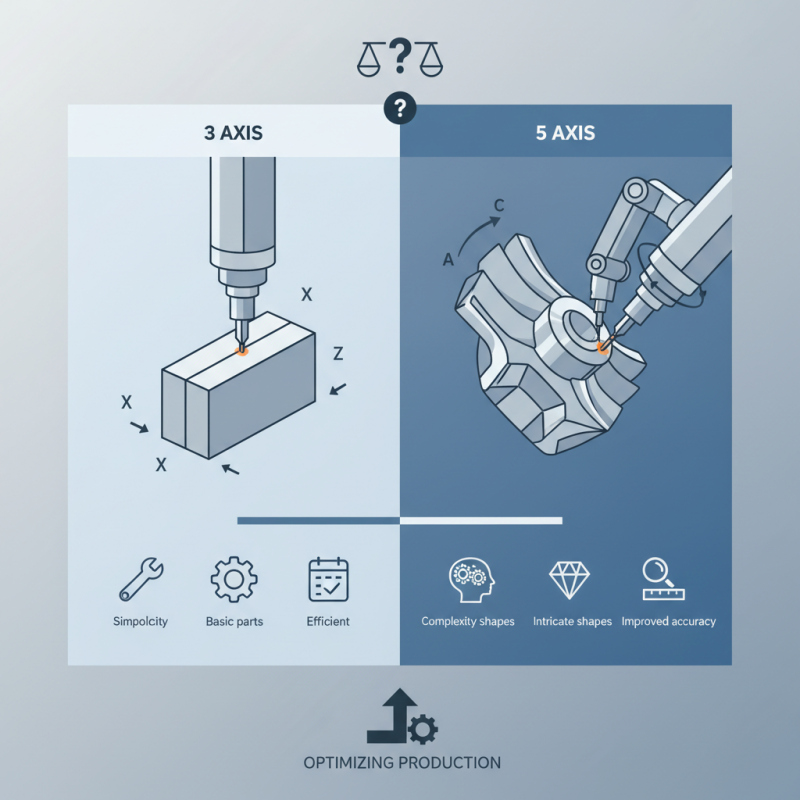
Introduction to 3 Axis and 5 Axis Machining Technologies
3 Axis and 5 Axis machining technologies are pivotal in modern manufacturing. 3 Axis machining operates on three linear axes: X, Y, and Z. It’s widely used for simpler parts and designs. This method excels at processes like drilling and milling. However, it has limitations. Complex geometries can be challenging, requiring multiple setups. This often leads to time inefficiencies.
In contrast, 5 Axis machining adds rotational movement. This means the workpiece can be manipulated in more directions. It allows for intricate designs that are often impossible to achieve with 3 Axis machining. Parts can be machined in a single setup, enhancing precision. This technology, while powerful, isn’t without its challenges. The initial investment is higher, and operating these machines requires specialized skills. Additionally, programming can be complex and time-consuming.
Choosing between these two technologies largely depends on the project needs. If your projects demand high precision and intricate designs, 5 Axis might be the go-to. On the other hand, for simpler components with lower budgets, 3 Axis is sufficient. Each choice has its own pros and cons, and understanding them is vital for making the right decision.
Key Differences Between 3 Axis and 5 Axis Machining
When choosing between 3-axis and 5-axis machining, it's vital to understand their key differences. 3-axis machining involves moving the tool along three linear axes—X, Y, and Z. This setup is simpler and often more affordable. It's suitable for flat surfaces and basic geometries. However, it can struggle with complex designs, requiring multiple setups and resulting in longer production times.
In contrast, 5-axis machining adds two rotational axes to the mix. This allows for more intricate designs and better tool access. With a 5-axis machine, you can machine all sides of a part in a single setup. This efficiency reduces the risk of errors and improves accuracy. However, it comes with a steeper learning curve and potentially higher costs. Not all shops have the experience or equipment for 5-axis work.
Both methods have their pros and cons. 3-axis machining may seem adequate for simpler tasks, but missed opportunities for precision exist. Choosing the right approach requires careful consideration of your specific needs and capabilities. Reflect on your project requirements. Which method truly aligns with your goals?
Advantages of 3 Axis Machining for Specific Applications
When evaluating the advantages of 3 axis machining, it’s essential to consider its specific applications. This technology excels in creating simple parts with minimal complexity. Industries often use it for producing flat, two-dimensional shapes or components that require only one side to be machined. Such applications include brackets, bases, and many prototypes.
Despite its limitations, 3 axis machining is known for its speed and efficiency. It is generally less expensive and operates with fewer setup times compared to 5 axis machining. This makes it a reliable choice for mass production of standard components. Engaging with experienced machinists can help you assess whether 3 axis machining fits your project well.
Tips: Pay attention to your component’s design. If it requires intricate features, consider how 3 axis might limit outcomes. Evaluate the materials as well; some work better with 3 axis setups. Regularly revisit your project needs. Flexibility can lead to better decisions in machining methods.
Benefits of 5 Axis Machining in Complex Component Production
In complex component production, 5-axis machining stands out due to its ability to manipulate material from multiple angles. This flexibility makes it ideal for components with intricate geometries. With 5-axis machines, manufacturers can create complex parts in a single setup. This reduces the need for repositioning, minimizing errors during the production process.
Additionally, 5-axis machining offers superior surface finishes. The ability to approach a workpiece from different angles enables the creation of smooth, detailed surfaces. This is particularly beneficial in industries like aerospace, where precision is paramount. However, it's essential to note that the learning curve for 5-axis machining can be steep. Operators must develop a good understanding of the tool paths and setups to maximize efficiency and precision.
While 3-axis machining remains relevant for simpler parts, it lacks the versatility of the 5-axis approach. Some companies may find the initial investment for 5-axis equipment daunting. Yet, the long-term benefits often justify this cost. Exploring both methods thoughtfully can lead to better production outcomes, especially for challenging projects.
Factors to Consider When Choosing Between 3 Axis and 5 Axis
When deciding between 3 Axis and 5 Axis machining, several factors come into play. Material type is crucial. 3 Axis is often suitable for simpler materials. It excels in flat, straightforward designs. However, for complex shapes and intricate details, 5 Axis is indispensable. It allows for multiple angles of approach, saving time and effort.
Tips: Assess your project requirements first. If your designs are intricate, lean towards 5 Axis. Simpler designs can benefit from 3 Axis machining.
Another factor is precision. 5 Axis machining offers higher accuracy. This is essential for industries like aerospace and medical devices. But, 3 Axis can still deliver satisfactory results for less demanding applications.
Tips: Evaluate the tolerances necessary for your parts. Higher precision requirements push the choice toward 5 Axis. Consider the cost implications of both options too.
Speed and efficiency are also important. 5 Axis machining can reduce setup time. Fewer setups mean faster production times. However, know that 3 Axis machining might still be ideal for quick, small runs.
Tips: Balance your deadlines with the complexity of the parts. Short-term projects can benefit from 3 Axis, while long-term ones may justify investing in 5 Axis.
FAQS
It excels at creating simple parts, such as flat shapes and prototypes.
3 Axis machining is generally faster and more cost-effective. It has fewer setup times, aiding mass production.
3 Axis has challenges with complex geometries, needing multiple setups, which causes inefficiencies.
5 Axis adds rotational movement, allowing for intricate designs with single setups for better precision.
Yes, it has higher initial costs and requires specialized skills for operation and programming.
If your project requires simple components and operates on a lower budget, 3 Axis is sufficient.
Not all materials work well with 3 Axis. Consider which materials are appropriate for your design.
Regularly evaluate your project needs, design complexity, and material suitability for informed decisions.
Yes, if your design requires intricate features, 3 Axis might limit your outcomes, leading to regrets.
Conclusion
In the realm of machining technologies, the question often arises: what is the difference between 3 axis and 5 axis machining? This article explores the fundamental aspects of both methods. 3 axis machining involves movement along three axes (X, Y, and Z) and is particularly effective for simpler, less complex components. It is often favored for its straightforward approach and cost-effectiveness in specific applications. Conversely, 5 axis machining allows for greater versatility and precision by enabling simultaneous movement across five axes, making it ideal for producing intricate structures and complex geometries.
When deciding between the two, several factors come into play, including project requirements, complexity of the parts, and production efficiency. Understanding these key differences and advantages is crucial for manufacturers seeking to optimize their machining processes while ensuring quality and accuracy in their component production.

 MecMill Precision